Shubra Palace
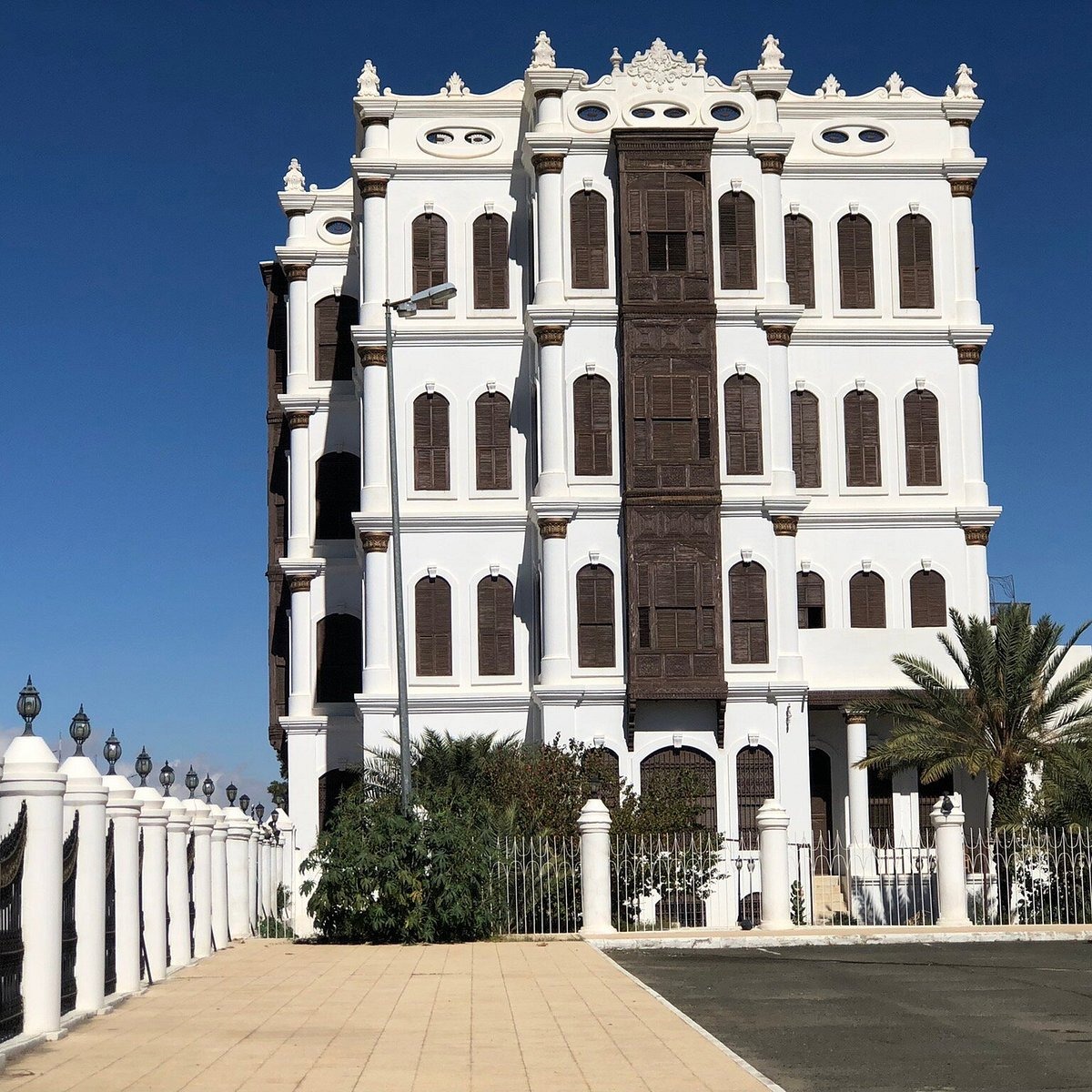
Shubra Palace in Taif is an early twentieth-century royal palace, now a museum, with Hejazi wooden balconies and Roman-style columns.
Shubra Palace stands in Taif and is now a museum under the Ministry of Culture. Construction began around 1904 and took about two years, with roughly 2,000 workers, though the exact year is uncertain. The design was inspired by a palace in the Shubra district of Cairo, which gave the building its name.
The palace has about 150 rooms over four floors, a basement, annexes and gardens, with a main western entrance and a side eastern one. It blends styles: columns with Roman influence, dark carved-wood rawasheen balconies in the Hejazi manner, and Islamic motifs on doors, windows and ceilings. Inside, a large double staircase leads to the upper floor.
King Abdulaziz used it as a summer residence from 1932 to 1953. It later served as seat of the Council of Ministers during the summer move to Taif and as a Ministry of Defence and Aviation headquarters. It became a museum in the late twentieth century, with halls on pre-Islamic and Islamic history, the unification of the Kingdom and a historic market. Check visiting details before you go.
Q. When was Shubra Palace built?
A. Work began around 1904, though the exact year is uncertain.
Q. Why is it called Shubra?
A. Its design was inspired by a palace in Cairo's Shubra district.
Q. What is inside?
A. Museum halls on Islamic history and the unification of the Kingdom.
21.2862, 40.4152 Open in Google Maps
Our website is in soft opening, so some locations may be inaccurate.
See it with a local guide
Retrace the Hejaz Railway
Shubra Palace is part of our Hejaz Railway journey, led by certified local guides. Tell us your dates and we will plan it with you.
You can also visit Shubra Palace on its own, not only as part of this journey: create your own path with just the places you want.