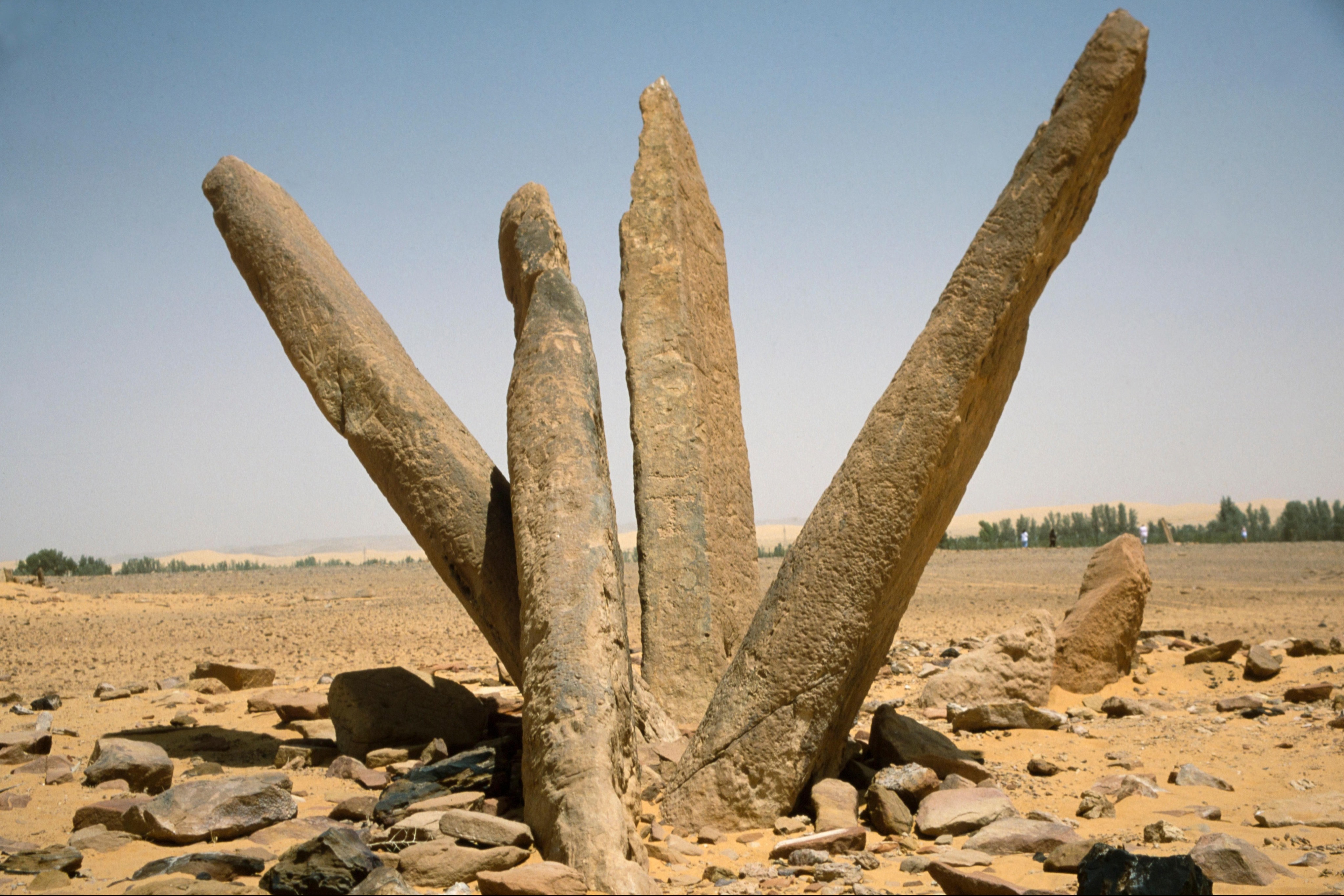
Rajajil Standing Stones
Groups of upright sandstone columns near Sakaka in Al Jawf, thousands of years old; why they were built is still debated.
The Columns of Rajajil stand in Al Jawf Province, south-east of the city of Sakaka. The monument is made of groups of trimmed sandstone pillars.
Excavations and surveys have recovered stone tools, pottery, obsidian, sandstone vessels, beads of metal, shell and bone, and two wells, 4 to 5 m deep. The findings are several thousand years old, and the columns are among the very old monuments of the region. Some columns carry Thamudic inscriptions, added by later visitors. The name comes from a local word for a gathering of men, because from afar the columns look like standing figures.
Why they were set up is unknown. Researchers have suggested a link to sunrise and sunset or to a calendar, a marker on a long-distance route through the Wadi Sirhan corridor, or a group of small sanctuaries. None is proved. The popular name "Saudi Stonehenge" is a comparison only.
29.813019, 40.220768 Open in Google Maps
Our website is in soft opening, so some locations may be inaccurate.
See it with a local guide
Meet Arabia's Architects
Rajajil Standing Stones is part of our three-day journey through the Nabataean kingdoms of northwest Arabia, led by certified local guides: Hegra, AlUla Old Town, the rock-cut tombs and more. Tell us your dates and we will plan it with you.
You can also visit Rajajil Standing Stones on its own, not only as part of this journey: create your own path with just the places you want.